• Welcome to Evaluation Works
  • About
  • Online Courses
    • Introduction to Research Project Management
    • How To Write A Journal Article: Ten Steps To Success
    • How To Write An Effective Research Abstract (Online Course)
  • Books
    • How to Write an Effective Research Abstract
  • Research Services
  • Contact
  • Blog

Evaluation Works

For all your research, evaluation and online course creation needs

Productivity for researchers, evaluators and academics

August 2, 2016 by admin Leave a Comment

Who is the most productive person you know? And what makes them that way?

Mine is a colleague who has a ‘habit’ – writing habit, that is. James (not his real name) is one of those prolific writers with an enviably long list of academic publications and successful research grant applications. His secret? According to him, there is no secret. He just ‘gets on with it’. Indeed, the very word ‘productivity’ sets his teeth on edge and makes him scowl.

The most productive people we know probably have this in common: they spend more time thinking about what to do than how to be more efficient.

Here’s how you can do the same:

1. Start with your goals
What do you want to achieve? Really achieve. Not today. Not tomorrow. But in three or five years’ time. Where do you want to be?

Next, start planning your route. What do you need to do to get there? Break your goals down into projects, or cohesive, but manageable elements. Chances are your list will contain several projects.

Now, take each project and do the same thing. Break it down until you have a list of activities that, once accomplished, will enable you to say you’ve achieved that particular goal. Make sure each project’s goal is tied to your overall timescale.

Identify what you need to do to complete each project. Place these tasks into the most effective order, from start to finish, so that you can make the best use of your time. These tasks form the basis of your weekly/daily to-do lists.

2. Put things in perspective
Productivity is about doing things efficiently. For researchers, that means focusing on tasks that will move you closer to achieving your goals. Irrelevance, distraction, unimportance, these are the enemies of productivity. They drain your resources and leave your to-do list in the same or worse state than when you made it, so you wind up drifting ever further from your goals.

How can you regain or maximize focus?

If you haven’t reviewed your goals in a while, do this first. Priorities change. Be honest with yourself about how realistic your goals are. Decide where you really want to focus and start there.

Run your daily/weekly to-do lists through the Stephen Covey’s (1989) time management matrix. (I like to think of it as a ‘shape sorter’ for adults.) The important but non-urgent tasks are where you need to focus to make real progress and move closer to your goals. You don’t have to tackle them all at once. Just pick one. Once you’ve achieved that, move on to another. If you really can’t decide which one to choose, close your eyes and stick a pin in the list. Wherever it lands, go with it. Focus requires a commitment to one thing at a time.

Try to increase the amount of time you spend focused on any one activity. According to Daniel Goleman (2013), the ability to focus attention differentiates high performers from everyone else, particularly in distraction-filled environments. Practice can increase your attention span, so by training yourself to focus for longer, you may be able to increase your productivity.

With free software, such as Tomighty, you can even tap into your body’s natural energy cycle by setting a timer and working on one thing for 90 minutes.

For more inspiration, take a look at Chris Bailey’s (2016) chronicle of the year-long experiments he did on himself to learn more about how to get the most out of his attention span and energy, including discovering his ‘biological prime time’. I’m not suggesting you go to the same lengths as Chris, but you don’t have to because he shares some fascinating insights, including the rule of three and even tips to distract yourself from distraction.

3. Practice
It is a harsh truth, but to become more efficient, at some point you just have to get on and do the things that matter. No excuses. How you choose to spend your 24 hours a day is, for the most part, exactly that. Your choice. There may be times when the only way to achieve your goals is to get up earlier, stay up later, turn off the TV, phone, internet and say ‘no’ to whatever is going to stop you getting the job done.

Easy? No.

Achievable? Yes.

That feeling of satisfaction you get from accomplishing something important – getting that paper written, submitting that grant application, finishing that course – is not only hard to beat, it motivates you to do more, so you can have that fabulous feeling of achievement again and again.

So, what are you waiting for?

Take that first step right now.

_________________________________________________________________________
References and resources

Bailey, Chris (2016) The Productivity Project: Accomplishing More by Managing Your Time, Attention, and Energy, Crown Business/Penguin Random House.

Covey, Stephen R (1989) The 7 Habits of Highly Effective People, Simon & Schuster, London.

Goleman, Daniel (2013) Focus: The Hidden Driver of Excellence, HarperCollins, New York.
Tomighty

Filed Under: Uncategorized

Planning For Success

June 9, 2016 by admin Leave a Comment

Stage Two of the Research Project Lifecycle is all about planning for success.

Once you have your ideas, your research question, your design and research methodology in place, it’s time to think about HOW you are going to make this work.

If you were putting on a new play or about to start filming for a new movie, you’d probably have a full dress rehearsal. A chance for everyone involved, from the actors to the director, stage or film crew to the wardrobe department, to put everything together in a trial run. Everyone knows the purpose of the trial run. It’s there so everyone can see what works and what needs fixing before the audience does.

Planning research has a lot in common with the dress rehearsal, except of course, that everything pretty much stays on paper (or computer) rather than the big screen or physical stage. Planning can also be somewhat technical, has more than its fair share of jargon and may be pounced upon by critics.

Our solution is to provide researchers with a simple, flexible, coherent planning process focused on achieving their research goals on time and to budget.

Use it to:
• Break any project into manageable activities you can track easily,
• Create a framework to identify resources and estimate costs,
• Identify activities crucial to your project’s success,
• Set milestones and sequence tasks effectively and efficiently, so you can prioritize your resources,
• Make sure your Research Project Plan contains everything you need when your project goes ‘live’, perhaps before your very own ‘Broadway’ audience.

____________________________________________________________________________________________________________________________________________________________________________________

For more about our planning process, check out our Introduction to Research Project Management online course, which includes a set of downloadable tools, templates and checklists you can use right now, or grab a copy of our book, How to Manage a Research Project: Achieve your Research Goals on Time and Within Budget.

____________________________________________________________________________________________________________________________________________________________________________________

Filed Under: Uncategorized

Do You Make These Three Research Project Management Mistakes?

April 20, 2016 by admin Leave a Comment

We all make mistakes, particularly when it comes to managing something as challenging and complex as research. Here we show you three of the most common traps researchers can fall into when they start to manage research and how you can avoid them.

Trap one: Micromanaging
Micromanaging is about trying to manage too much at once. Managing research is a fine balance between seeing the wider picture and focusing on the details. When we micromanage, we focus too hard on the details until we can no longer – as the saying goes – see the wood for the trees. Despite stemming from a desire to be in control, it usually has the opposite effect and can lead to anxiety and overwhelm. One response to this is to keep track of fewer things at any given time, but how do you know which of these things are the most important and that you haven’t abandoned something that will later turn out to be crucial?

Trap two: Not monitoring frequently or regularly enough
Let’s face it. We all have plenty of demands on our time. Priorities change and weeks, if not months, can easily slip by without checking in and seeing what project deadlines are approaching that need your attention. Managing several projects? Then the chances of falling into this trap can quickly multiply.

The trouble with not monitoring a project frequently enough or regularly enough is that too much time can elapse before you realise there is a problem – time that could have been spent taking action to resolve the issue and preventing it becoming serious. Many projects have such tight timescales (and budgets) that they simply don’t have the flexibility to accommodate delays. Before you know it, your project starts to over-run.

Trap three: Not identifying the bottlenecks
Bottlenecks are those elements of a project where tasks and resources are squeezed, sometimes to the point that nothing can get through. The cause may be anything from not enough people to do the work needed at a given time, lack of access to vital information or study participants, or equipment that isn’t available or breaks down when you most need it.

The problem is not so much that these things happen – all projects face constraints, after all – but that so many are foreseeable, yet not identified, before they wreak havoc on a project that was, until that point, going so well. Too often the critical elements of a project and the likely impact of bottlenecks occurring are not highlighted when they should be, during the planning stage, meaning solutions to address and overcome them are not anticipated, budgeted for, or built into the project’s workflow.

So, how do you avoid these three mistakes?
The best way to avoid all three is to use an effective and reliable process to manage your research. A good process provides a guiding structure and framework, ideally one that should be flexible enough to suit any research project and that you can build on as your skills and experience develop and grow, much like the process we use at Evaluation Works.

That process should include detailed project planning, assessing risks to your research project, breaking your project into manageable tasks and sequencing them effectively and efficiently so that you know which are critical to completing on time and where the bottlenecks are likely to be, avoiding trap number three. Doing this also lays the groundwork to avoid trap number one: micromanaging. This way you focus your attention on what matters most at any given time, rather than trying (and failing) to keep track of every detail.

As for trap number two, the key is to make monitoring and reviewing progress a regular habit. Mark it on your calendar as a regular appointment. How often will depend on the duration and complexity of your project, but once every month is a good place to start.

___________ ### __________

You can find out more about the process we use by taking our online course Introduction to Research Project Management: How to Achieve Your Goals on Time and Within Budget (complete with downloadable templates and checklists to get your project off to a great start) or reading our latest book, How to Manage a Research Project: Achieve Your Goals on Time and Within Budget.

Filed Under: Uncategorized

6 Ways Managing Research Projects Can Improve Your Career Prospects

April 14, 2016 by admin Leave a Comment

Of all the skills and experience you can gain as a researcher, which will be the most valuable to your career? The ability to create surveys, perhaps? To design experiments? Run focus groups? Or even to finish your PhD?

Like most researchers, I’d say all those skills and achievements are valuable. As are many more areas of expertise you may acquire, regardless of your research field(s).
But what will potentially have the biggest impact on your career prospects? We all know the uncertainties that exist with research careers, particularly the lack of jobs in academia and the anxieties caused by continually trying to secure your next post. Given that these uncertainties are unlikely to go away any time soon, it is a wise researcher who develops their most transferable skills. And, the ability to manage a research project is surely one of the most transferable of all.

1. Managing a project gives you a broad and highly transferable skillset
Whether you work in academia, industry, government, or wherever, project management skills are much in demand. Why? Because they take time to develop and not everyone does them well. Employers need people who can communicate clearly, solve problems, make decisions. When you manage a research project you apply not one but eight key skills. So whether you’re one of the 40% of researchers who stay in academia after your PhD or the 60% who work elsewhere, these skills are an amazing asset.

2. Makes you focus on what is important
Doing research gives you the freedom to explore all kinds of interesting and worthwhile things. It’s why many of us are attracted to research in the first place. But it also comes with a myriad of tasks and demands. You may be expected to collect and analyse data, write, teach, look for funding, comment on proposals, organize and attend meetings, supervise student work, develop other people’s research skills, often in the same week. To manage research successfully, you must be realistic and focus on what is crucial. Employers need someone who can prioritize effectively to help them achieve their goals. That someone could be you.

3. Provides evidence you can do what you set out to achieve
We all have good intentions. Not everyone sees them through. Completed your PhD? Got that research paper published? Facilitated that new workshop? Such achievements look great on a CV, but even rejections can provide evidence of worthwhile achievements. Think of the (often collaborative) effort it takes to write a funding proposal. Even if your application doesn’t get funded, you still submitted it, which already sets you apart from those who didn’t. Chances are you learned plenty from the experience. Recruiters and promotion boards will want to hear about it.

4. Shows you can get things done within constraints
Sponsors and employers want results. If not yesterday, then now. Whether your research project is meant to take six months or six years, it shows your capacity to get things done within a set timeframe. Do it without going over budget and you’ll prove to sponsors and employers you are someone they can trust with precious resources.

5. Showcases your effectiveness, organization and productivity
Building your project management skillset, focusing on what it is important and achieving your goals with limited resources makes you a more effective and efficient manager. That means becoming more organized. This, in turn, has positive effects on how you manage your time and, therefore, on your productivity. Your reputation for professionalism and reliability will grow as a result. Who wouldn’t want you on their team? Or leading it?

6. Gives you a repeatable system and process you can use anywhere
Once you learn how to manage research projects effectively, you will have a process or system you can refine, repeat and use anywhere. With any kind of project (research or not), in any setting, organization, just about anywhere in the world. How’s that for transferability? Another great thing is you can start right now, building your project management skills and experience with every step of your research.

What will you do today to enhance yours?

For an easy way to get started, why not explore the eight key skills every successful research project manager needs to develop here on our free online course: Getting Started with Research Project Management.

Filed Under: Uncategorized

25 Free Research Project Management Tools

March 22, 2016 by admin Leave a Comment

25 NO COST tools to manage research

Managing research can be challenging and time-consuming whatever your research project or level of experience. When I first had the idea to compile a list of free online tools and resources that might be of use to anyone managing one or more research projects, tools that could provide a useful function or service without needing to ‘upgrade’ to a paid product after a few weeks or before you were confident of its features, let’s just say I was envisaging a much shorter list. However, there are many skills involved in managing research and people may only be interested in particular aspects, such as time management or planning tools, rather than managing a whole project from start to finish. Whatever you’re looking for, I hope the tools listed in this free guide may help. Check it out here.

Do you have a favourite free tool or one that you’ve found particularly helpful for managing research? Why not share it in the comments box below?

[hls_Buzzinar ID=1]


Filed Under: Uncategorized

5 Ways To Get The Best From Your PhD

November 16, 2015 by admin Leave a Comment

Filed Under: Uncategorized Tagged With: PhD

Quantitative Health Research Book

October 10, 2013 by admin Leave a Comment

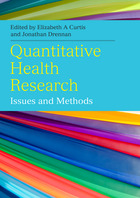
I’ve been a health services researcher and evaluator for many years and am delighted that my chapter introducing Evaluation Research  has been published in ‘Quantitative Health Research: Issues and Methods’, by Open University Press.  The editors, Elizabeth Curtis and Jonathon Drennan from the University of Dublin, have done a sterling job pulling this together.

“Learning quantitative research is taken much for granted. This is probably why there are fewer generic books on quantitative than qualitative research. This book is long overdue. Clearly- written and well structured, it takes us through the whole journey of a research project from developing ‘research questions’ to ‘presenting the findings’, passing through philosophical underpinnings, recruitment of participants and ethical considerations. Written by an array of well-known researchers and teachers, this book will certainly appeal to new as well as seasoned researchers. Those who will use it, will not be disappointed.”
Kader Parahoo, University of Ulster

To learn more, visit: http://mcgraw-hill.co.uk/html/0335245730.html


Filed Under: Uncategorized

www.evaluationworks.co.uk
  • Privacy Policy

Copyright © 2025 · Lifestyle Pro Theme on Genesis Framework · WordPress · Log in